
THE WELLNESS JOURNAL
Low Energy, Reduced Libido and Declining Vitality: What Changes in a Man’s Body?
Explore how sleep, stress, lifestyle and hormones can influence energy, libido and everyday vitality.
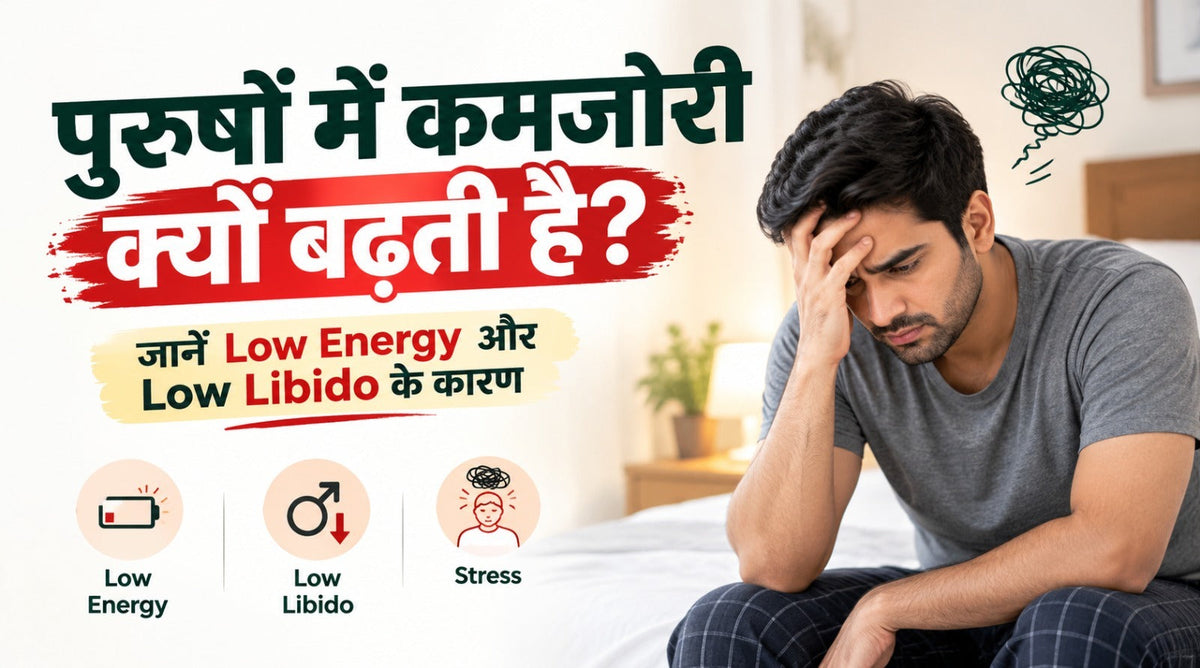
To everyone around you, you're still doing everything you normally do. You go to work. You handle family responsibilities. You may even keep up the same exercise routine.
From the outside, everything seems fine.
But you know something is different.
You don't quite have the same energy. Your interest in sex isn't what it used to be. Recovery after physical activity seems slower. You feel tired more often, and the drive you once had doesn't always show up when you need it.
You want to do something about it, but you don't always feel comfortable talking about it.
It's easy to put this down to age. It's also easy to assume testosterone must be the problem. Neither assumption is necessarily correct.
Energy, libido, physical strength, and overall vitality are influenced by several factors working together — sleep, stress, physical activity, body composition, nutrition, medications, underlying health conditions, and hormones all play a role. Testosterone is one piece of that picture, not the entire picture.
It May Start With How You Feel, Not a Single Symptom
Changes in vitality don't always arrive dramatically. Sometimes it's just harder to get going in the morning. Sometimes the afternoon slump becomes routine. Sometimes a workout that once felt manageable leaves you drained, or sexual interest becomes less spontaneous than it used to be.
These changes have many possible explanations: poor sleep, prolonged stress, a demanding work schedule, little physical activity, changes in weight, alcohol use, and an unbalanced diet can all affect how you feel day to day. Certain medicines and health conditions can also contribute to tiredness, changes in sexual interest, or loss of muscle strength.
Low testosterone is one possibility among these — but symptoms alone can't establish that diagnosis. Feeling tired does not automatically mean you have low testosterone.
Testosterone Matters. But It Isn't the Whole Story.
Testosterone is an important hormone in men, playing a role in sex drive, sperm production, muscle and bone health, red blood cell production, and other aspects of male physiology. Levels also tend to decline gradually with age.
But the body isn't a machine with one switch labelled "testosterone." Stress can change how you sleep. Poor sleep can affect how you feel during the day. Inactivity can affect physical conditioning. Changes in body weight can influence metabolic and hormonal health. An underlying medical condition may produce symptoms that look like what people casually call "low T."
That's why jumping straight from a symptom to a hormone diagnosis can be misleading. If symptoms persist, a healthcare professional can look at the bigger picture and, where appropriate, use blood testing to investigate testosterone and other possible causes — a testosterone test on its own isn't enough to diagnose every problem (MedlinePlus, Testosterone Levels Test). For a fuller look at what can actually cause low testosterone and when it's worth getting checked, see MedlinePlus's guide on the topic.
Don't Underestimate Sleep
When life gets busy, sleep is often the first thing sacrificed. Late nights become normal. Screens stay on until bedtime. Work continues after dinner. Then the alarm goes off early the next morning — and eventually, being tired starts to feel normal.
The connection between sleep and male hormonal health is worth paying attention to. An analysis using U.S. National Health and Nutrition Examination Survey data found that shorter sleep was associated with lower serum testosterone, though an association alone doesn't prove lack of sleep is the sole cause (PubMed). Controlled research has looked at sleep restriction directly, too: in a widely cited study, healthy young men who slept under five hours a night for a week showed a meaningful drop in daytime testosterone (Leproult & Van Cauter, JAMA, 2011).
The practical lesson is simple: before looking for a solution for low energy, check the basics. Are you sleeping enough? Recovering properly? Moving regularly? Eating reasonably well? Carrying more stress than you've been acknowledging?
Stress Can Change More Than Your Mood
Short periods of stress are a normal part of life. The problem is when the "temporary" phase never seems to end — deadlines, financial pressure, family responsibilities, long hours, poor sleep, constant notifications.
None of these automatically causes a hormone problem. But together, they affect sleep, appetite, exercise habits, recovery, and general wellbeing. That's one reason it's useful to think about male vitality as a broader concept rather than reducing everything to testosterone.
You are not just a hormone level. You're a combination of sleep, nutrition, movement, recovery, stress management, physical health, and hormonal health.
Where Does Herbal Nutrition Fit In?
Several herbs have a long history of traditional use in wellness, and some have also been studied in modern research.
Ashwagandha is a good example: some preparations may help with stress and sleep, and some studies suggest certain preparations taken for a few months may support testosterone levels — though the research base includes small studies using different preparations (NCCIH, Ashwagandha).
Shilajit has a long traditional role in formulations aimed at energy and vitality, with appeal partly rooted in its naturally occurring mineral and organic components.
Why Combine Several Herbs?
A man's daily wellness needs aren't limited to one thing. Energy is one concern; physical stamina may be another; stress and recovery matter too; sexual interest is influenced by physical, psychological, and lifestyle factors together. A multi-ingredient formula is designed around that reality, rather than relying on one ingredient to do everything.
Prime T-Active follows this approach — a Daily Herbal Vitality Formula combining Shuddha Shilajit, Ashwagandha, Fenugreek, Gokshura, Kauncha, Vidarikand, Safed Musli, Shatavari, Akarkara, Jaiphala, and Lavanga in a daily tablet, built around the areas men commonly associate with vitality: energy, stamina, strength, and libido.
A Closer Look at a Few Key Ingredients
Ashwagandha — long traditional use, with modern research particularly examining its role in stress and sleep (NCCIH).
Shilajit — a traditionally vitality-oriented ingredient, commonly found in herbal wellness products; its inclusion here reflects that traditional role.
Fenugreek — used traditionally for thousands of years and also widely used as a food spice; modern research has examined it for several purposes, with evidence varying by use (NCCIH, Fenugreek).
Gokshura (Tribulus terrestris) — a long history of traditional use, frequently included in men's herbal formulations. It should not be considered a treatment for erectile dysfunction.
The same principle applies across the formula: an ingredient can have a traditional place in wellness without being presented as a drug.
The Bigger Picture Is Still Your Daily Routine
Supplements shouldn't become an excuse to ignore the basics. If you're sleeping four or five hours a night, rarely exercising, eating poorly, and living under constant stress, adding a tablet to the routine doesn't fix the underlying lifestyle on its own.
Start with what you can control: get your sleep routine in order, move your body regularly, eat a balanced diet, keep alcohol within sensible limits, manage chronic stress, and maintain a healthy body weight. A wellness formula can sit alongside those habits — it shouldn't be expected to replace them.
When Should You Actually See a Doctor?
This is the most important part of the conversation.
If low energy, reduced libido, erectile difficulties, loss of muscle strength, or other changes continue for a significant period, don't simply assume you need a testosterone booster. Persistent symptoms can have different causes — low testosterone is one possibility, but thyroid problems, diabetes, medication effects, obesity, and other conditions can produce overlapping symptoms.
If sexual difficulties are persistent, they deserve attention rather than embarrassment — erectile dysfunction can sometimes be associated with underlying health problems, and persistent symptoms are worth discussing with a healthcare professional (NCCIH, Erectile Dysfunction/Sexual Enhancement).
Prime T-Active: A Daily Approach to Male Vitality
Prime T-Active is a Daily Herbal Vitality Formula for adult men, combining 12 herbal ingredients in a daily tablet format — Shuddha Shilajit, Ashwagandha, Fenugreek, Gokshura, and others traditionally used in men's wellness.
The purpose is straightforward: to complement a healthy routine with a broader herbal approach to everyday energy, stamina, strength, vitality, and libido.
It is not a testosterone treatment. It is not intended to diagnose or treat low testosterone, erectile dysfunction, or another medical condition.
Taking care of your vitality isn't always about finding one wrong thing. Sometimes it's about noticing changes early, understanding what might be behind them, and taking a more complete approach to your everyday health.
Conclusion
Not every drop in energy means low testosterone. Not every change in libido means something is medically wrong. But persistent changes are worth understanding.
Start with sleep. Look at stress. Review your lifestyle. Pay attention to nutrition and physical activity. If the change continues, speak to a healthcare professional rather than trying to diagnose yourself.
Herbal nutrition can be one part of a broader wellness routine. Your overall health is the bigger picture.
KEEP EXPLORING
More from the journal

04 November 2026
Shilajit Benefits for Men: Energy, Stamina and Testosterone
A closer look at Shilajit, its potential benefits, the limits of the evidence and what to know before use.
Read article
04 November 2026
Blood Flow and Male Performance: Why Circulation Matters More Than You Think
Understand the role of circulation and what L-Arginine and L-Citrulline do in the body.
Read article
13 July 2026
Increase Your Bed Time Naturally
Maintaining good bedroom stamina is an important part of overall men's wellness. Many people assume that improving bed time requires complicated solutions, but in...
Read article